A Special Kind of Artist
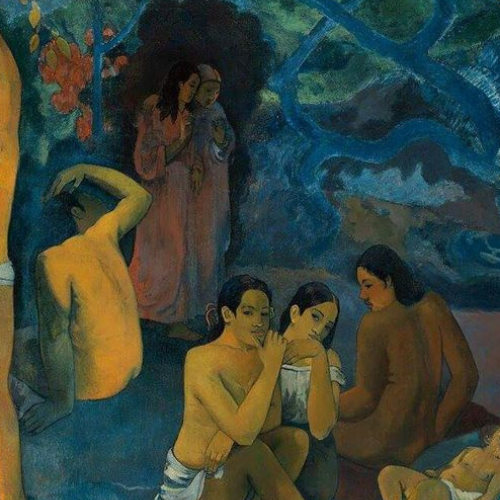
Once A. K. Coomaraswamy, the great twentieth-century Indian scholar of traditional metaphysics and art, said that “in modern society the artist is a special kind of person, while in traditional society every person is a special kind of artist.” I always loved this sentiment even though it may appear nostalgic to contemporary minds. Having recently returned from traveling through India Coomaraswamy’s statement’s took on new meaning for me. When a culture values being and belonging as much or more so than doing and achieving, different qualities of our humanity are encouraged. When the sacred is part and parcel of everyday life a natural joy arises and that in turn leads to expression through traditional arts like music, dance, image making, cooking, festivals, etc. This was my experience in one of the ashrams I stayed at. As part of the ashram is a middle school for indigent boys. They found that by eliminating mobile phones whose presence had infected the boys minds the community returned to their previous state of health. The degree of joy, enthusiasm and devotion that the boys at the school/ashram exhibited was something that prior to, I had no idea was even possible for human beings. When western values of competition take a back seat to a deep sense of place and cultural belonging each person can become that special kind of artist, his own true self can shine without having to that be a ‘special’ person and they don’t have to limit themselves to specializing in one creative craft or artform. It wasn’t only there that I experienced this sense of belonging and devotion. Those values seemed baked into the culture from ancestral times. Ever since the industrial revolution took hold in the west our culture has been trying to regain a connection to the earth, to the mythic, and our own divinity. In a world that was becoming increasingly more fragmented the arts became a refuge for a lucky few. Foreign goods from exotic locales in Asia the middle east and Africa brought new inspiration to European artists in late 19th century Europe and there was a renaissance in the art of painting that continued well into the 20th century. These artists were not really the iconoclasts that they were portrayed to be. Claude Monet for example saw himself as part of a great painting tradition which included JMW Turner and Edouard Manet. He even was a fan of the French Rococo artists. Monet saw himself as carrying the torch and for the French painting tradition and that meant the ephemeral quality of ‘touch’. The mysterious soulful quality that emanates from an artists brush when it meets the canvas. This celebration of ‘touch’ was intrinsic to the Impressionist mindset and in Germany too you heard the echo… “The artist is the hand that, by touching this or that key, sets the soul vibrating automatically.” Wassily Kandinsky Paul Gauguin first fled Europe for Tahiti in 1800 trying to disavow himself of civilization and immerse himself in an innocent, simple relationship with nature and an ancient pagan culture. Even though Tahitian culture had been quite compromised by colonialism he did succeed in finding what he was looking for to an extent. This snippet from a letter to his friend the great painter Odilon Redon gives you a hint as to how profound his consciousness was altered. Referring to Māori (Tahitian) culture he said “It’s a matter of not death in life but life in death”. In another quote he proclaims…. “Under the continual contact with the pebbles my feet have become hardened and used to the ground. My body, almost constantly nude, no longer suffers from the sun. Civilization is falling from me little by little. I am beginning to think simply, to feel only very little hatred for my neighbor – rather, to love him.” Maybe Gauguin was the original hippie, seeking an escape from the malaise of industrialized, crowded and depraved conditions in France. In one form or another all of the impressionist and post-impressionist painters were seeking an escape from modernity and the emptiness they perceived in their native cultures. They were aiming to retrieve something that had been lost. A vitality, a primordial connection to nature and essential qualities of love, truth and beauty. But in a competitive capitalist society this return to innocence can only be a kind of mirage. In traditional societies where economies are based on commonly held values of sharing, cooperation, spirituality and egalitarianism there is more space for the kind of artist that Coomaraswamy refers to. We must work to rebuild cultures where commonly held values can support a return to neo- traditional regenerative communities in which all members of a community can find meaning, purpose and value in their work and each person becomes an artist of living. Sounds utopian but even in this messed up globalized, industrialized world I know it can happen if even in small pockets. I’ve seen it. And those small communities will be the seeds for the future if humanity is to survive the next onslaught of technological change. Artists who by choice continue to use simple tools can contribute to the slow act of artmaking without the aid of tech devices and keep the ancient crafts of humanity alive for future generations. Returning to the basics that open up our hardwired capacities to express from our hearts, dialogue with soul, and the mystery that holds it all. “And here in my isolation I can grow stronger. Poetry seems to come of itself, without effort, and I need only let myself dream a little while painting to suggest it.” Paul Gauguin Top Image: Paul Gauguin, Where do We Come From? What Are We? Where Are We Going? (detail) 1897-98, 55″ by 148″, Museum of Fine Arts Boston.