MICHAEL ZIEVE | Fine Artist & Educator

Header - Michael Zieve | Fine Artist & Educator

Search Artwork

Uncategorized

Uncategorized

Reviving the Mystical View

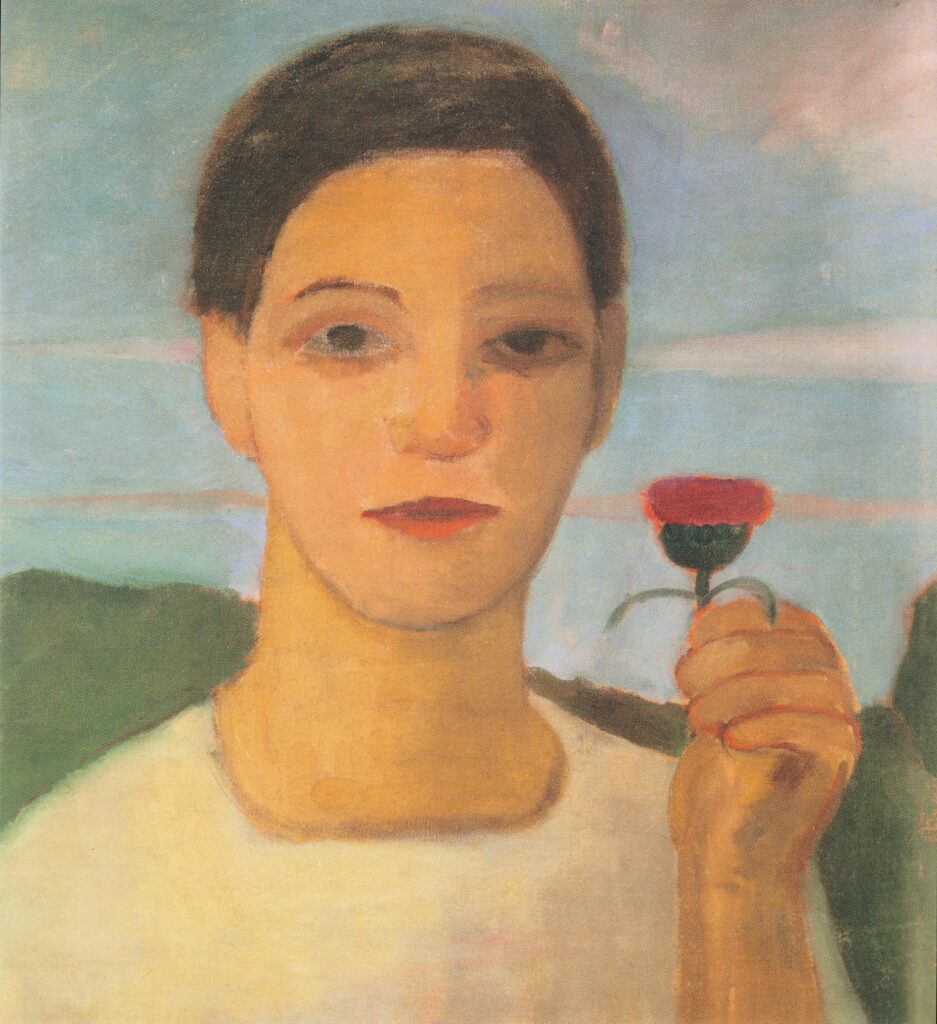
Recently a student of mine wrote to me after a class…. “I want to say that I think that by you researching and presenting the show to us of Paula Modersohn- Becker, you honor and help her (and her artwork) live on – past her short life. It reminds me of Family Constellation work in that we can change the past and affect the future stories through our inner work.” I thought this this was a wonderful and provocative comment, not totally graspable like poetry. I wrote back…. “I believe these artists awaken or keep alive something humanity is losing. The paintings are like magical talismans that reorient our psyche’s…..”  It’s fascinating to contemplate the various routes that viewing art takes to transform and reconnect ourselves to what’s true and undying. The mysterious transmission of feeling and spirit from a painting to people born at a much later time is both fascinating and magical. Sometimes just looking can unlock inner truths that are dormant and need activation for the purpose of an individual’s evolution. If we allow ourselves to dialogue with those images and feelings through creative expression, this becomes a modality of finding what’s needed, the textures, colors and forms become the visitors, the angels of healing. I wonder though what kinds of paintings and art works elicit the response that my student wrote to me about. Some artworks tap into our imaginal, archetypal and spiritual bodies through an emotional response or a feeling of transcendence. It may be that a particular image signifies or triggers a complex of unconscious emotions or memories. This multi layered response has been integral to the experience of looking at art up until fairly recently. Within the complexity of forms that modern and postmodern art have taken some of this multi layered response has been diluted if not completely negated. The early Modernist movement in Europe (approx. 1880–1930) was based on a reorientation to a deeper engagement with life, the psyche and a recognition that mankind was at a precipice. A place where we risked losing our essential humanness to the onslaught of technological, industrial and cultural change. True visionaries are always way ahead of their time. William Blake (early 1800’s) countered the ugliness of his age through his divinely inspired imagery, prose and poetry. Later on the symbolist movement of the mid to late 19th century led by Gustav Moreau, Paul Gauguin and Odilon Redon opened the gates to primitivism, mysticism and the modes of personal inner expression that turned over the old traditional ways and led to a rejuvenation in painting. It wasn’t only the painters but the poets and writers of that era like Baudelaire, Rimbaud, Verlaine, Apollinaire, Mallarme and later Rilke that inspired and complemented a movement that had impregnated all the arts. As modernism played out into a new century through the many ‘isms’, Fauvism, Cubism, Orphism, Surrealism, up into Abstract Expressionism there was I believe a prevalent view that art could affect transcendence and the spiritual. Not only through the evocation of beauty but through awakening archetypes, psychological insight and the subconscious. Theosophy was in the air in the European art capitals and there was a spiritual thirst in the midst of the dominant materialist view. Modernism doesn’t have a definable period. Some say it ended in the late 20th century or before, others say late modernism is still a living movement. But at some point the Modern movement was challenged by the highly ambiguous term Postmodernism and with that something shifted in a fundamental way. At least in academia, art was now divorced from its primordial wellspring, the spiritual. After the second world war U.S. art collectors, curators and academics created a powerful taste making force. Highly spiritual artists like Agnes Pelton (1881-1961) who had popularity in the 1930’s we’re virtually erased from art history. A secular highbrow culture out of the art capital of N.Y.C. dominated discourse through the 50’s, well into the late decades of the century. The word ‘God’ became a sort of taboo in serious art circles.   It’s ironic that one of the prophets of the so-called secular Modernist movement, Wassily Kandinsky, was deeply religious. His art was filled with hidden mystical references related to his Christian faith. He thought that the separation of high art and low art was an artificial concoction. In their famous co-operative publication, The Blue Rider Almanac, (pub.1912) Kandinsky and his collaborators presented artworks from non-European nations, primitive art, folk art and modern art together with the most dominate artists in the publication, children! “Art is born from the inner necessity of the artist in an enigmatic, mystical way through which it acquires an autonomous life. It becomes an independent subject, animated by a spiritual breath.”    Wassily Kandinsky As we look back at early Modernism and the fuzzy birth of the Postmodern era, we can see in hindsight just how much was lost. I’ve never seen an adequate definition of Postmodernism. I define it is as a sort of negation, the end of the romantic view, the divesting of meaning from form, replaced by irony and a predominantly intellectual approach to art. An over reliance on language for art to have meaning vs. the intuitive, emotional and simple aesthetic response to art. The art writer and academic historian Camille Paglia said it bluntly probably decades ago…. ”The art world will never revive until postmodernism fades away. Postmodernism is a plague upon the mind and heart.” Now we have a new term coming into cultural parlance, Metamodernism. “Metamodernism is what we get when we take the strategies associated with postmodernism and productively reduplicate and turn them in on themselves. This will entail disturbing the symbolic system of poststructuralism, producing a genealogy of genealogies, deconstructing deconstruction, and providing a therapy for therapeutic philosophy.” Storm, Jason Ānanda Josephson (2021). Metamodernism: The Future of Theory. University of Chicago Press. I was hoping that it would also provide therapy for people without PhD’s who can’t understand this jargon. I don’t find that
Uncategorized

A Special Kind of Artist

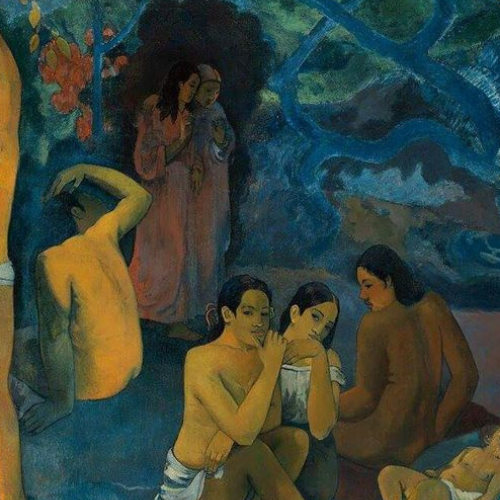
Once A. K. Coomaraswamy, the great twentieth-century Indian scholar of traditional metaphysics and art, said that “in modern society the artist is a special kind of person, while in traditional society every person is a special kind of artist.” I always loved this sentiment even though it may appear nostalgic to contemporary minds. Having recently returned from traveling through India Coomaraswamy’s statement’s took on new meaning for me. When a culture values being and belonging as much or more so than doing and achieving, different qualities of our humanity are encouraged. When the sacred is part and parcel of everyday life a natural joy arises and that in turn leads to expression through traditional arts like music, dance, image making, cooking, festivals, etc. This was my experience in one of the ashrams I stayed at. As part of the ashram is a middle school for indigent boys. They found that by eliminating mobile phones whose presence had infected the boys minds the community returned to their previous state of health. The degree of joy, enthusiasm and devotion that the boys at the school/ashram exhibited was something that prior to, I had no idea was even possible for human beings. When western values of competition take a back seat to a deep sense of place and cultural belonging each person can become that special kind of artist, his own true self can shine without having to that be a ‘special’ person and they don’t have to limit themselves to specializing in one creative craft or artform. It wasn’t only there that I experienced this sense of belonging and devotion. Those values seemed baked into the culture from ancestral times. Ever since the industrial revolution took hold in the west our culture has been trying to regain a connection to the earth, to the mythic, and our own divinity. In a world that was becoming increasingly more fragmented the arts became a refuge for a lucky few. Foreign goods from exotic locales in Asia the middle east and Africa brought new inspiration to European artists in late 19th century Europe and there was a renaissance in the art of painting that continued well into the 20th century. These artists were not really the iconoclasts that they were portrayed to be. Claude Monet for example saw himself as part of a great painting tradition which included JMW Turner and Edouard Manet. He even was a fan of the French Rococo artists. Monet saw himself as carrying the torch and for the French painting tradition and that meant the ephemeral quality of ‘touch’. The mysterious soulful quality that emanates from an artists brush when it meets the canvas. This celebration of ‘touch’ was intrinsic to the Impressionist mindset and in Germany too you heard the echo… “The artist is the hand that, by touching this or that key, sets the soul vibrating automatically.”       Wassily Kandinsky Paul Gauguin first fled Europe for Tahiti in 1800 trying to disavow himself of civilization and immerse himself in an innocent, simple relationship with nature and an ancient pagan culture. Even though Tahitian culture had been quite compromised by colonialism he did succeed in finding what he was looking for to an extent. This snippet from a letter to his friend the great painter Odilon Redon gives you a hint as to how profound his consciousness was altered. Referring to Māori (Tahitian) culture he said “It’s a matter of not death in life but life in death”. In another quote he proclaims…. “Under the continual contact with the pebbles my feet have become hardened and used to the ground. My body, almost constantly nude, no longer suffers from the sun. Civilization is falling from me little by little. I am beginning to think simply, to feel only very little hatred for my neighbor – rather, to love him.” Maybe Gauguin was the original hippie, seeking an escape from the malaise of industrialized, crowded and depraved conditions in France. In one form or another all of the impressionist and post-impressionist painters were seeking an escape from modernity and the emptiness they perceived in their native cultures. They were aiming to retrieve something that had been lost. A vitality, a primordial connection to nature and essential qualities of love, truth and beauty. But in a competitive capitalist society this return to innocence can only be a kind of mirage. In traditional societies where economies are based on commonly held values of sharing, cooperation, spirituality and egalitarianism there is more space for the kind of artist that Coomaraswamy refers to. We must work to rebuild cultures where commonly held values can support a return to neo- traditional regenerative communities in which all members of a community can find meaning, purpose and value in their work and each person becomes an artist of living. Sounds utopian but even in this messed up globalized, industrialized world I know it can happen if even in small pockets. I’ve seen it. And those small communities will be the seeds for the future if humanity is to survive the next onslaught of technological change. Artists who by choice continue to use simple tools can contribute to the slow act of artmaking without the aid of tech devices and keep the ancient crafts of humanity alive for future generations. Returning to the basics that open up our hardwired capacities to express from our hearts, dialogue with soul, and the mystery that holds it all. “And here in my isolation I can grow stronger. Poetry seems to come of itself, without effort, and I need only let myself dream a little while painting to suggest it.”       Paul Gauguin Top Image: Paul Gauguin, Where do We Come From? What Are We? Where Are We Going? (detail) 1897-98, 55″ by 148″, Museum of Fine Arts Boston.

Uncategorized

Intuitive Art Process And The Appreciation Of Beauty

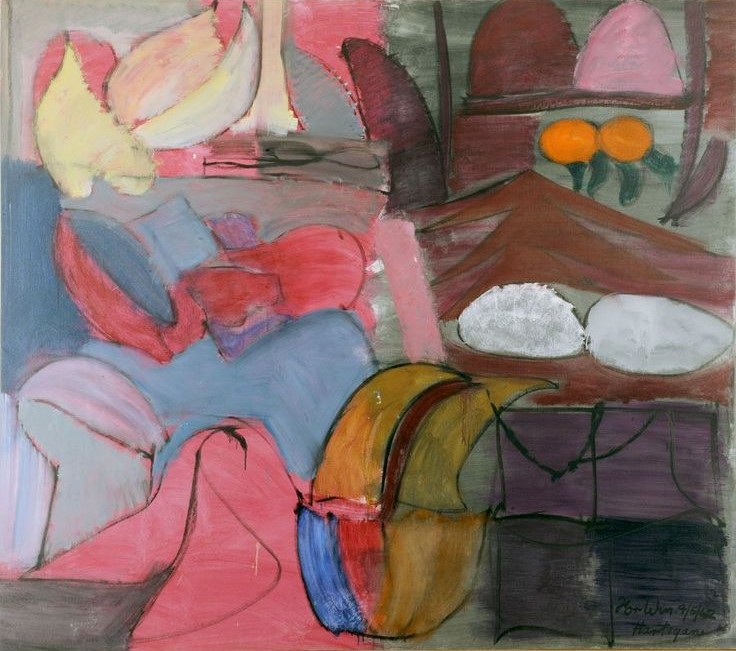
What is intuitive process artmaking? The great painter Grace Hartigan said it simply…” I am a process artist…you start out with an idea; ideas keep coming as your creating and eventually the painting tells you what it wants.” An idea can be the impetus for the painting but is not intended to be the end point. It’s the creative process itself that gets full permission to take whatever turns it wants, often bringing the artist to a place of surprise and amazement. Some process teachers tell their students that beauty has nothing to do with this process because the intention to make something beautiful can derail the process which is after truth and not necessarily beauty. Beauty, of course is in the eye of the beholder, in my mind if a work has the ring of truth or is an authentic expression of the heart it is naturally a thing of beauty. But beauty in the traditional sense of the word is not something to be averse too either. My observations over the years in process painting studios tells me that sometimes an artist suffers from too little input from the outside. The result can be repetition and an over reliance on ones limited visual vocabulary. In my classes I offer a middle ground between process art making, aesthetic appreciation and dialoging with imagery. We create a safe container grounded in deep listening to help open the intuitive heart. For me our inherent thirst for beauty naturally dovetails with the longing for expressive freedom and spiritual inquiry. As an art school graduate and longtime artist, the process approach opened me to the joy of making art from my child’s eye perspective and brought my awareness to the judgements that held back my creativity and blindsided me to my habitual choices. This training or untraining was invaluable to me but it did seem to have its limitations. I observed an unconscious conformity of style in many process painting classes although the work was more often than not wonderfully rich in emotional content. How does one keep that valuable content while opening up the gates to a wider cast of influences, formal qualities, painting modes and movements that most untrained or even trained artists are not aware of? One of my art professors used to say “As an artist you don’t live in a vacuum”. He was preaching the importance of visual vocabularies and aesthetic appreciation of artwork whatever their source from pop culture to ‘outsider’ artists, to great masters of the past. I value the exposure I’ve had to master artists of the past not all of them trained artists and feel I have something to offer those who would like to learn more about how to appreciate the language of painting. In my online classes I use the work of great artists as inspiration that can sprout new ideas for students. We can’t do it all though so we pick and choose the influences that appeal to our individual temperament and this can vary over time. Art that does not relate specifically to our work of the moment still informs our hearts and minds and can awake something in us that may blossom further down the line. Unpredictable relationships happen when we see work that is outside our limited purview. We are inspired to grow into ourselves by seeing what others have done in the past. If you’re an amateur or untrained artist you usually allow yourself freedom to grow and experiment, on the other hand many professionals, by virtue of their connection to the market place find that to be challenging. Trained artists and professionals can benefit from dipping into that place of freedom and experimentation. We live in an unprecedented time where exposure to great art from the past and from a variety of cultures is there at our fingertips on the keyboard. The danger of this easy access is that we become overwhelmed by brilliant works of the past and present that can inhibit our native imagination. The balance hangs between the two extremes of overexposure to inspiring art and the limited palette of our own inventions. There are seasons in our artistic life that naturally move within this spectrum of opening out and honing our personal craft. Ultimately, I’m not alone in thinking that appreciating beauty is a key element of psychological wellness. It lifts us up and inspires us. If we ignore the gifts of our artistic legacy from other times, we impoverish ourselves as artists and as a culture. As the artist and writer Martin Prechtel say’s, in these dark times our task as artists/artisans is to preserve the seeds of all the arts that have been passed down to us for a future time when humanity has the opportunity to appreciate them and bring them more fully into flower. One of these arts is the ability to see, feel and understand artwork and thereby enhance our creative imagination. The world thirsts for the soul’s authentic and uniquely personal expression. Recognizing our deepest self in making and/or appreciating art opens us to the great universal heart and therein lies the power of it’s alchemy. Top Image: Grace Hartigan, The Dream, 1962, oil on canvas

Uncategorized

On Jewels of a Higher Order

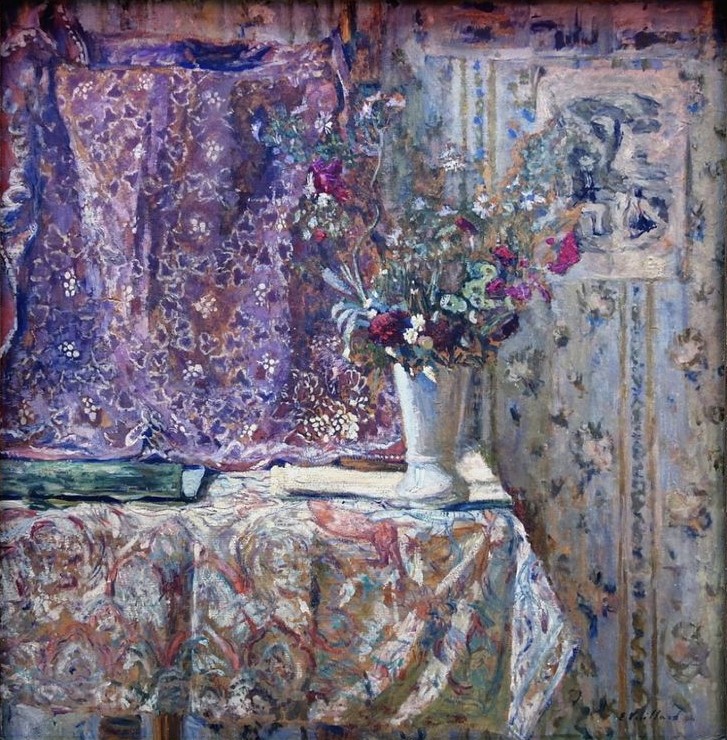
“In Vuillard’s interior every detail however trivial, however hideous even- the pattern of the late Victorian wallpaper, the art nouveau bibelot, the Brussels carpet is seen and rendered as a living jewel: and all these jewels are harmoniously combined into a whole which is a jewel of a yet higher order of visionary intensity.”      This quote is from the remarkable essay ‘Heaven and Hell’ by Aldous Huxley, published in 1954. He’s referring to the great French painter Edouard Vuillard, 1868-1940. For Huxley, Vuillard’s painting is a vehicle that transports us into a heightened sense of reality, one akin to visionary or mystical experience and this experience, which one might call aesthetic rapture, is a deeply rooted need in the psyche of man.  He goes on to say that this need has been the impetus for artmaking since the beginning of our species history. It transcends cultural considerations, civilized or uncivilized, colonized or free indigenous cultures. I believe it’s important when viewing and creating art to recognize that art satisfies a basic human drive. It arises out of the imagination (whether personal or collective) and not primarily from mental constructs. It’s essential for a healthy culture to see art as the natural response to life and not merely a dialogue with abstract ideas. Making art and the transportive experience of appreciating art fulfills our thirst for the visionary, mystical and Transcendent Drive as Carl Jung called it. Art is the domain of the mystical and the archetypal. It works with timeless templates of consciousness that are not within the grasp of the mind. The distinctions between high and low art, technically brilliant or untrained, ugly or beautiful are not relevant to the transmission of meaning, beauty or spirit. Anyone who has ever spent time with children’s art will know what I’m talking about. There is a transmission through art that transcends qualitative judgements. You could say there is criteria for a successful painting in formal terms however all criteria in the end remain subjective. The true appreciation of art is found in the gut and the heart while the rational component is secondary. These quotes from Wasily Kandinsky illustrate my point: “It is never literally true that any form is meaningless and “say’s nothing”, every form in the world say’s something. But it’s message often fails to reach us, even if it does, full understanding is often withheld from us.” “Form often is most expressive when least coherent. It is often most expressive when outwardly most imperfect, perhaps only a stroke, a mere hint of outer meaning.” “To those who are not accustomed to it the inner beauty appears as ugliness because humanity in general inclines to the outer and knows nothing of the inner.”   Kandinsky implies that it is a contemplative consciousness that is able to pick up on the nuances of form and feeling. His contemporary the well-known writer on art and metaphysics Ananda Coomaraswamy dovetails nicely when he say’s… “…and the simplest expression reminds us of one and the same state. The sonata cannot be more beautiful than the simplest lyric, nor the painting than the drawing. Merely because of their greater elaboration. Civilized art is not more beautiful than the savage art, merely because of its possibly more attractive ethos.” Both writers point to the alchemy that takes place within the viewer when the object of contemplation becomes a doorway to the unitive state, where subject /object dichotomy breaks down and one catches a glimpse, or recognition. This word ‘recognition’ takes on a special significance here. In ancient tantric traditions of India, the aim of life was not to become something but to recognize something. In many ways the antithesis of our cultural norms in the west. The west always championed becoming while the east valued the simplicity of being. For tantric philosophers and spiritual adepts of 11th century Kashmir aesthetic rapture was seen as precious doorway into freedom and there was much discourse on it. But this rapture went beyond appreciation only of the beautiful. For them it was…” the sheer wonder of being that one accesses in connection with any experience that intensifies and absorbs awareness.”     Christpher Wallis from “The Recognition Sutras”. This could mean any encounter with the senses or mind when in a flash one experiences the pure wonder and beauty of being, or even the shock of ugliness which triggers the collapse of subject/object duality and we experience our native non-dual understanding. It may be preferrable to experience that shock with a work of beauty but not all art is beautiful in the common sense of the word. Any artwork in the broadest sense can be a powerful medium for a shift in awareness. It can transform both the artist and the viewer in an instant of recognizing the true depth of our experience beyond our default mode. When the viewer and the object of contemplation initiates that brief ‘recognition’ what remains is a yearning. A yearning for more and a desire to go deeper because we’ve been given a glimpse of something so tantalizing to the spirit. For some artists this can translate into a desire to increase their skill set while for others it becomes an aspiration to abandon it and the two ways aren’t mutually exclusive. Take this quote by Henri Matisse for example… “You study, you learn, but you guard the original naivete. It has to be within you, as desire for drink is within the drunkard or love is within the lover.” For Matisse this deep desire and everything he had learned was in service to his inner voice. Contrary to what I was taught to believe about him in art school he wasn’t one of the fathers of a secular modern art movement devoid of spirituality, he was a modern-day mystic who said…. “The essential thing is to work in a state of mind that approaches prayer.”                       Henri Matisse   As I stated

Scroll to Top